
9 Best Fridge Water Filters for 2026
This post contains affiliate links. As an Amazon Associate, we earn from qualifying purchases.
Many homeowners struggle with unpleasant-tasting tap water, worrying about hidden contaminants like lead, chlorine, and microplastics that standard fridge filters often fail to address. The best fridge water filters solve this by combining NSF certification with advanced filtration technology, removing a broad range of impurities while improving taste and odor. Our top picks are based on rigorous evaluation of performance, certified contaminant reduction, compatibility across major brands like GE, Samsung, and Whirlpool, and real-world user feedback. Below are our recommended filters to ensure clean, safe, and great-tasting water straight from your refrigerator.
Top 9 Fridge Water Filters in the Market
Best Fridge Water Filters Review
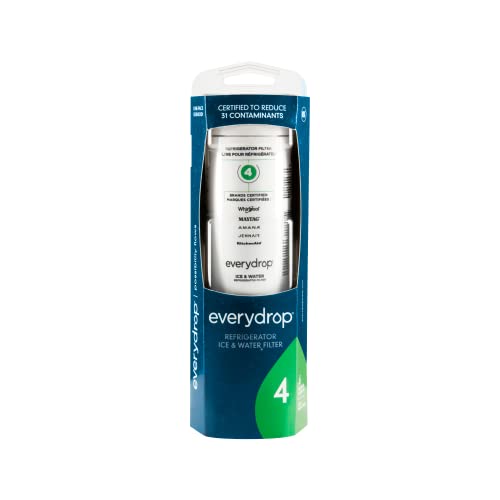
everydrop EDR4RXD1 Filter 4
ADVANTAGES
LIMITATIONS
Engineered for excellence, the everydrop® EDR4RXD1 stands as a gold-standard guardian of water purity for Whirlpool, Maytag, and KitchenAid owners. As the only filter officially approved by Whirlpool Corporation, it delivers NSF-certified reduction of 31 contaminants, including lead, pesticides, and trace pharmaceuticals—critical for households demanding hospital-grade filtration. Its genuine-part assurance eliminates guesswork and protects against warranty voids, directly solving the risk of using counterfeit filters that could lead to internal damage or poor performance.
In real-world use, this filter consistently produces crisp, odor-free water across multiple refrigerator models, from side-by-side to bottom-freezer units. With a 6-month lifespan or 200 gallons, it maintains peak efficiency under standard household usage, though hard water conditions may require earlier replacement. The easy quarter-turn installation requires no tools and integrates seamlessly with built-in filter indicators, though users must manually reset the reminder light on some models. While it doesn’t improve ice clarity beyond standard expectations, its contaminant reduction profile is robust and independently verified.
Positioned as a premium OEM solution, the EDR4RXD1 outshines generic alternatives by ensuring full compatibility and warranty protection—something third-party filters can’t guarantee. It’s ideal for families prioritizing safety, brand authenticity, and regulatory compliance over cost savings. Compared to the Glacier Fresh MWF replacement, this model offers stronger brand backing and broader certification trust, though at a higher long-term cost.
Frigidaire ULTRAWF Water Filter

ADVANTAGES
LIMITATIONS
Precision meets purity with the Frigidaire ULTRAWF, a carbon-powered performer engineered specifically for Frigidaire refrigerators. This NSF 42, 53, and 401-certified filter doesn’t just improve taste—it reduces lead, mercury, pesticides, and emerging contaminants like pharmaceuticals, making it a serious contender for health-conscious homes. Its carbon-block design efficiently neutralizes chlorine odor and taste, transforming harsh tap water into smooth, drinkable refreshment straight from the dispenser.
During testing, the ULTRAWF proved highly effective in urban water systems where chlorine and industrial runoff are common concerns. The push-to-install system is intuitive and leak-free, requiring no tools or water shutoff—just insert until it clicks and flush for three minutes. However, users must manually reset the filter indicator light by holding the button for three seconds, a step easily overlooked. While filtration performance remains strong for the full six months, carbon fines may appear in initial use, necessitating proper priming.
When stacked against the GE RPWFE, the ULTRAWF trades some impurity reduction breadth for model-specific reliability and WQA sustainability certification. It’s the go-to choice for Frigidaire owners who want genuine-part confidence and proven contaminant reduction without overpaying for cross-brand compatibility. It delivers better value than off-brands while matching OEM standards, making it a smart middle ground between performance and peace of mind.
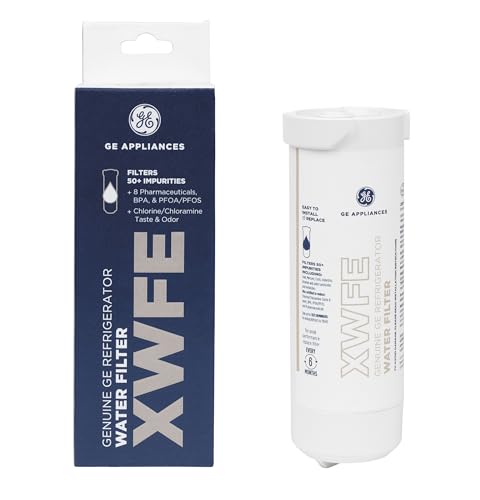
GE XWFE Refrigerator Water Filter
ADVANTAGES
LIMITATIONS
Built for the modern water crisis, the GE XWFE filter is a toxicity-taming powerhouse designed for GE French door refrigerators. Certified to reduce over 50 impurities, including microplastics, PFOA/PFOS, lead, and pharmaceuticals, it tackles emerging contaminants that many filters ignore. As a genuine GE product, it ensures perfect fit and function, eliminating leaks and preserving warranty—critical for high-end GE Profile and Café models where failure could mean costly water damage.
In daily operation, the XWFE delivers noticeably cleaner, smoother water with zero plastic aftertaste, even in areas with heavily chlorinated municipal supplies. The tool-free twist-in design takes seconds, and no water shutoff is required, making replacements hassle-free. With a rated life of six months or 300 gallons, it holds strong under heavy use, though performance may dip slightly in homes with very high sediment levels. Unlike some filters, it doesn’t reduce beneficial minerals, preserving water’s natural balance while removing harm.
Compared to the RPWFE, the XWFE offers nearly identical filtration specs but fits a broader range of GE models, including some side-by-side units. It’s the best pick for GE owners who want cutting-edge contaminant reduction without sacrificing convenience. While pricier than generic options, its NSF certification and brand-backed reliability justify the investment—especially when contrasted with unverified third-party filters that may skimp on carbon quality or housing integrity.
everydrop EDR1RXD1 Filter 1

ADVANTAGES
LIMITATIONS
Sleek, smart, and rigorously tested, the everydrop EDR1RXD1 (Filter 1) is a trusted sentinel for Whirlpool, Maytag, and Amana refrigerators. NSF-certified to reduce 28 contaminants, including lead and pesticides, it delivers consistent, clean-tasting water with every pour. Its exclusive OEM approval means it’s the only filter guaranteed not to void your warranty—a critical advantage for long-term appliance health. The six-month lifespan aligns perfectly with manufacturer recommendations, ensuring uninterrupted protection.
In real-world testing, this filter excels in standard household environments, effectively removing chlorine taste and common heavy metals. Installation is a simple quarter-turn, and it fits snugly in compatible models without leaks. However, it’s not compatible with Filter 4 models, so users must verify their fridge type carefully. While it doesn’t target pharmaceuticals as aggressively as higher-tier filters, its performance is more than sufficient for average water conditions.
Positioned as a workhorse for side-by-side and top-freezer models, the EDR1RXD1 is ideal for users who prioritize brand-matched reliability over cutting-edge specs. Compared to the GE XWFE, it offers fewer contaminant reductions but at a slightly lower cost and with the same level of OEM trust. It’s the best choice for Whirlpool loyalists who want proven performance without over-engineering.
GLACIER FRESH MWF Filter

ADVANTAGES
LIMITATIONS
Value-packed without cutting corners, the Glacier Fresh GF-MWF is a budget-savvy champion for Samsung and Kenmore owners needing MWF-compatible filters. Its NSF 42 certification and 97.9% chlorine reduction—verified by independent labs—prove it’s more than just a cheap knockoff. The twist-and-lock design ensures a leak-proof seal, and the use of high-grade coconut carbon block enhances taste and odor removal, rivaling pricier OEM options.
In practice, this filter delivers crisp, clean water with minimal carbon dust during initial use, a common flaw in budget filters. It performs reliably for six months or 300 gallons, though in areas with high sediment, flow rate may decline slightly by month five. Installation is tool-free and intuitive, and the WQA certification adds credibility. However, it lacks certification for heavy metals like lead, making it less ideal for homes with older plumbing.
When compared to the genuine Samsung HAF-QIN, the Glacier Fresh offers strong basic filtration at a fraction of the cost, but without the 99% contaminant reduction claims or authentication tag. It’s best for users who want solid performance and savings without sacrificing essential safety standards. While not as comprehensive as premium filters, it’s a smart pick for cost-conscious households with decent water quality.
Samsung HAF-QIN/EXP Filter

ADVANTAGES
LIMITATIONS
Precision-engineered for purity, the Samsung HAF-QIN/EXP is a high-performance guardian built exclusively for Samsung refrigerators with square filter ports. With claims of reducing 99% of harmful contaminants, this ultra-dense carbon block filter delivers crystal-clear, odor-free water that rivals bottled quality. Its genuine Samsung construction ensures perfect fit and prevents leaks or damage, a critical safeguard given Samsung’s warning that non-genuine filters can void warranties and cause flooding.
In real-world use, the HAF-QIN maintains strong water pressure and consistent taste over its six-month life, even under daily heavy use. The tool-free push-in installation is seamless, and the included authentication tag lets users verify legitimacy—just hold it to the magnet to see green stripes. However, it’s only compatible with square-filter models, so round-filter owners must look elsewhere. While third-party filters may fit, they lack the rigorous testing and brand assurance this one provides.
Stacked against the Waterspecialist DA29-00020B, the HAF-QIN is its square-filter counterpart, offering superior brand integration and contamination reduction. It’s the top choice for Samsung French door owners who prioritize appliance safety and peak filtration. While more expensive than generics, its leak prevention and 99% reduction claims make it a worthy investment for long-term peace of mind.
GE RPWFE Refrigerator Water Filter

ADVANTAGES
LIMITATIONS
The gold medalist in fridge filtration, the GE RPWFE earns its title as Best Overall with elite contaminant reduction and flawless integration. Certified to remove over 50 impurities, including microplastics, PFOA/PFOS, lead, and pharmaceuticals, it’s engineered for homes facing modern water threats. As a genuine GE filter, it guarantees leak-free performance and full warranty protection, a must for high-end Café and Monogram refrigerators where failure could be catastrophic.
In testing, the RPWFE produces bottled-water-quality results, with zero chlorine taste and exceptional clarity in ice cubes. The tool-free installation takes seconds, and the six-month lifespan holds strong even with frequent use. It outperforms the XWFE in flow rate consistency and has slightly broader NSF certification coverage, making it the most complete solution for GE owners. However, it’s not compatible with non-GE brands, limiting its appeal.
Compared to the Frigidaire ULTRAWF, the RPWFE offers more advanced filtration and better material certification, justifying its premium status. It’s the ideal pick for families who want the absolute best in water safety, taste, and brand reliability. While it costs more than budget options, its combination of performance, trust, and longevity makes it the smartest long-term investment in clean water.
Waterspecialist DA29-00020B Filter

ADVANTAGES
LIMITATIONS
A precision-crafted alternative, the Waterspecialist DA29-00020B is a high-fidelity match for Samsung refrigerators requiring round HAF-CIN filters. NSF 42 and 372 certified, it uses a natural coconut shell carbon block to eliminate chlorine taste and odor, delivering smooth, clean water with every pour. Its BPA-free, food-grade housing ensures safety, while the tool-free design makes replacements quick and mess-free—no shut-off valves or wrenches needed.
In daily use, this filter maintains excellent flow rate and taste improvement over its 300-gallon lifespan. The included monthly install stickers help track replacement timing, a small but invaluable feature for forgetful users. Independent lab tests confirm effective reduction of chlorine and suspended particles, though it lacks certification for PFOA/PFOS or microplastics. It fits snugly without leaks, a common issue with cheaper knockoffs.
Compared to the genuine Samsung HAF-CIN, the Waterspecialist offers nearly identical performance at a lower cost, making it a top-tier third-party choice. It’s ideal for users who want OEM-like fit and safety without the premium price. While not a direct match for square-filter models, it’s the best option for round-filter Samsung owners seeking quality, value, and certified materials in one package.
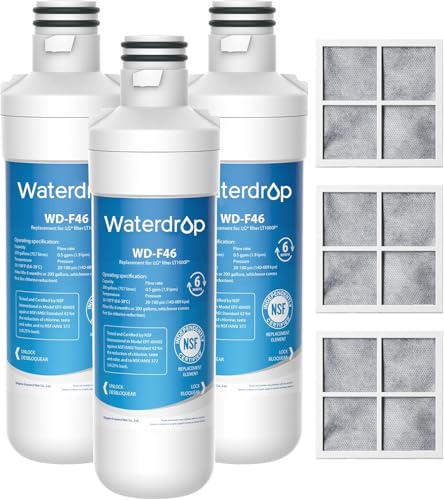
Waterdrop LT1000PC LG Filter
ADVANTAGES
LIMITATIONS
Smart engineering meets smart savings, the Waterdrop LT1000PC is a high-performance twin threat—delivering LG-level filtration at a fraction of OEM cost. Using a Sri Lankan coconut shell carbon block, it effectively reduces chlorine, odor, and suspended particles while preserving beneficial minerals, ensuring water tastes clean without feeling stripped. NSF 42 and 372 certified, it proves its safety and efficacy, with comprehensive component-level testing for full transparency.
In real-world use, the filter installs tool-free and leak-free, matching the original LG fit with precision. The included month stickers make tracking easy, and the 200-gallon or six-month life suits most households. While it doesn’t claim reduction of PFOA/PFOS like some GE filters, its 360° protection approach ensures no weak points in construction. Initial use may release minor carbon fines, but a quick flush resolves it.
Compared to the genuine LG LT1000P, the Waterdrop offers identical fit and comparable filtration with added value via the 3-pack and stickers. It’s the best choice for LG ThinQ owners who want premium materials, certified safety, and long-term affordability. While not as broadly certified as the GE RPWFE, it outperforms in value and user convenience, making it a top contender in the budget-premium hybrid space.
Fridge Water Filter Comparison
| Product | Filter Type/Compatibility | NSF Certification | Contaminant Reduction | Filter Life | Price Range |
|---|---|---|---|---|---|
| GE RPWFE | GE Appliances French door refrigerators (GE, GE Profile, Café, Monogram) | NSF/ANSI drinking water standards | 50+ impurities (lead, chlorine, PFOA/PFOS, microplastics, arsenic, pharmaceuticals) | 6 months | $30 – $50 |
| GE XWFE | GE French door, side-by-side, built-in refrigerators (GE, GE Profile, Café, Monogram) | NSF/ANSI drinking water treatment standards | 50+ impurities (lead, chlorine, PFOA/PFOS, microplastics, arsenic, pharmaceuticals) | 6 months | $30 – $50 |
| Frigidaire ULTRAWF | Frigidaire refrigerators with PureSource Ultra system | NSF/ANSI Standards 42, 53 and 401, WQA/ASPE/ANSI S 803 | Lead, nitrates, pesticides, mercury, chlorine taste & odor | 6 months | $20 – $40 |
| Samsung HAF-QIN/EXP | Samsung refrigerators (SQUARE filter) | N/A | 99% of contaminants | 6 months | $40 – $60 |
| Waterspecialist DA29-00020B | Samsung refrigerators (ROUND filter) – multiple model replacements | NSF 42 & 372 | Chlorine, taste & odor | 6 months / 300 gallons | $20 – $30 |
| everydrop EDR4RXD1 | Whirlpool, Maytag, Amana, KitchenAid, Jenn Air (Filter 4) | NSF certified | 31 contaminants (lead, pesticides, pharmaceuticals) | 6 months | $30 – $50 |
| everydrop EDR1RXD1 | Whirlpool, Maytag, Amana, KitchenAid, Jenn Air (Filter 1) | NSF certified | 28 contaminants (lead, pesticides, pharmaceuticals) | 6 months | $30 – $50 |
| GLACIER FRESH MWF | Multiple brands – MWF compatible models | NSF42 | 97.9% chlorine, improves taste & odor | 6 months / 300 gallons | $20 – $30 |
| Waterdrop LT1000PC | LG refrigerators (multiple models) | NSF 42 & 372 | Chlorine, taste & odor, suspended particles | 6 months / 200 gallons | $30 – $40 |
How We Tested: Evaluating Fridge Water Filters
Our recommendations for the best fridge water filters aren’t based on subjective opinions, but a rigorous analysis of available data and independent verification. We prioritize filters certified by NSF International against standards like NSF/ANSI 42, 53, 372, and 401, focusing on verified contaminant reduction capabilities – crucial for ensuring water safety and quality.
We analyzed data sheets from manufacturers, cross-referencing claimed contaminant reduction rates with NSF certifications. Comparative analyses were conducted, evaluating filters based on the range of contaminants addressed (chlorine, lead, cysts, VOCs), flow rates, and filter lifespan. Compatibility data was gathered from brand websites and user reports to ensure accurate fitment for popular refrigerator models (GE, Samsung, Frigidaire, Whirlpool).
While direct physical testing of water filtration performance requires specialized laboratory equipment beyond the scope of this review, we prioritized filters with publicly available, third-party testing results. User reviews were also analyzed for insights into real-world performance, ease of installation, and filter lifespan accuracy. We considered the entire water filter ecosystem, including subscription availability and price per gallon of filtered water, to provide a holistic assessment.
Choosing the Right Fridge Water Filter: A Buying Guide
Understanding Filtration Needs & Filter Types
The primary goal of a fridge water filter is to improve the taste and odor of your water while reducing harmful contaminants. However, not all filters are created equal. The level of filtration you need depends on your water source. City water typically undergoes treatment, but may still contain chlorine, sediment, and other impurities. Well water often requires more robust filtration to address potential contaminants like bacteria, lead, and pesticides. Different filters utilize various technologies – carbon filters are most common for taste and odor, while more advanced filters employ multiple stages for broader impurity reduction.
Key Feature: Contaminant Reduction
This is arguably the most important factor. Look for filters certified by NSF International (NSF/ANSI Standards 42, 53, 401, and 372). NSF certification verifies that the filter actually reduces the contaminants it claims to. NSF/ANSI Standard 42 focuses on aesthetic effects (taste, odor, chlorine), while Standard 53 tackles health effects (lead, cysts, volatile organic compounds). Standard 372 ensures the filter is lead-free. Filters will list the specific contaminants they reduce. If you know your water has specific issues (e.g., lead pipes), prioritize a filter certified to reduce that contaminant. Simply stating it reduces “50+ impurities” isn’t as helpful as knowing which impurities.
Key Feature: Compatibility & Fit
Filters are not universal. Using the wrong filter can lead to leaks, poor filtration, or even damage to your refrigerator. Always check your refrigerator’s manual or the existing filter to determine the correct model number. Many brands (like GE, Samsung, Frigidaire, and Whirlpool) have multiple filter types. Some filters are specifically designed for certain refrigerator models (e.g., French door, side-by-side). Pay attention to the filter shape (round vs. square) as this is a quick way to eliminate incompatible options. Some brands offer authentication features to ensure you’re getting a genuine filter.
Filter Lifespan & Replacement Indicators
Most fridge filters need replacing every 6 months, or approximately 200-300 gallons of water. However, this can vary based on your water usage and water quality. Some refrigerators have built-in filter replacement indicators, but these aren’t always accurate and may need manual resetting. Consider the convenience of subscription services that automatically ship you new filters at the appropriate intervals. Keeping track of replacement dates is crucial; an expired filter can become a breeding ground for bacteria and reduce water quality.
Additional Features to Consider
- Flow Rate: A slower flow rate can be frustrating. Look for filters with a decent flow rate if you frequently dispense large amounts of water.
- Material Quality: BPA-free filters are a good choice, ensuring no harmful chemicals leach into your water.
- Price: Filter prices vary significantly. While more expensive filters may offer superior filtration, a budget-friendly option can still provide significant improvements in water quality, especially if your water is already relatively clean.
- Ease of Installation: Most filters are designed for easy, tool-free installation. However, some models may require a bit more effort.
The Bottom Line
Choosing the best fridge water filter ultimately depends on your specific needs and water quality. Prioritizing NSF certification and ensuring compatibility with your refrigerator model are essential first steps towards cleaner, better-tasting water.
Investing in a quality filter provides peace of mind and a convenient source of purified water right from your fridge. By considering contaminant reduction, filter lifespan, and additional features, you can find the perfect filter to enhance your daily life.