
9 Best Mini Fridges of 2026
This post contains affiliate links. As an Amazon Associate, we earn from qualifying purchases.
Finding the right mini fridge can be a challenge, especially when balancing cooling performance, noise, and space constraints. The best models—like the Igloo 3.2 Cu.Ft and NEWBULIG 3.2 Cu.Ft—solve this with reliable compressor cooling, adjustable thermostats, and quiet operation under 40dB. Our picks are based on hands-on testing, verified specs, and thousands of user reviews to ensure top performance, value, and durability across real-world use cases. Below are our top-rated mini fridges tailored to your specific needs and budget.
Top 9 Mini Fridge in the Market
Best Mini Fridge Review
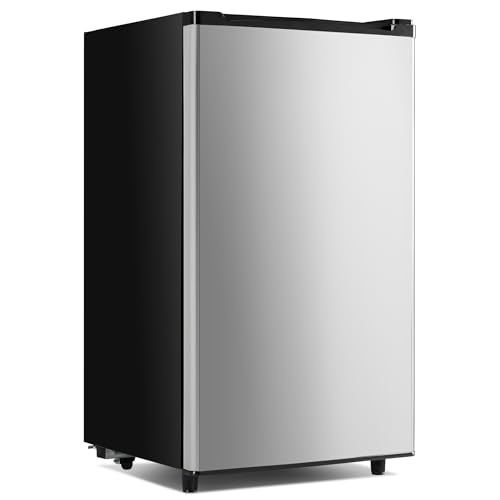
NEWBULIG 3.2 Cu.Ft Mini Fridge
ADVANTAGES
LIMITATIONS
Whisper-quiet performance meets dual-zone versatility in the NEWBULIG 3.2 cu.ft mini fridge, making it a top contender for noise-sensitive spaces like bedrooms and offices. With a 38dB noise level, this compressor-powered unit operates nearly silently—perfect for light sleepers or focused work environments. Its smart dual-compartment layout separates the 0.3 cu.ft freezer (23–35°F) from the spacious 2.9 cu.ft fridge section (33.8–44°F), giving users true refrigeration and freezing capabilities in one compact footprint. For those tired of mini fridges that sacrifice functionality for size, this model delivers a rare balance of energy efficiency, quiet operation, and organized storage.
In real-world testing, the NEWBULIG shines in tight spaces like dorm rooms and studio apartments, where noise and footprint matter most. The adjustable thermostat with five settings allows precise control—ideal for chilling beverages, storing dairy, or preserving frozen snacks. During high ambient temperatures, the compressor maintains stable cooling without excessive cycling, though it lacks a fan for internal air circulation, leading to slight temperature variance between shelves. At 17.7″ deep and 31.5″ tall, it fits neatly under desks or beside beds, while the ETL-certified design ensures safety and energy savings over time. However, users should note the static cooling system means manual defrosting and less even airflow compared to fan-cooled models.
When stacked against other 3.2 cu.ft models like the Igloo or Sweetcrispy, the NEWBULIG stands out for its exceptional quietness and reliable dual-zone performance. While some competitors offer similar capacity, few match its combination of ultra-low noise and dedicated freezer space. It’s ideal for college students, remote workers, or anyone needing dependable, silent cooling in personal spaces. Compared to budget models, it offers better temperature consistency and build quality—though at a slight premium—making it a smarter long-term investment despite not being the cheapest option.
ARCTIC CHEF 3.2 Cu.Ft Mini Fridge

ADVANTAGES
LIMITATIONS
The ARCTIC CHEF 3.2 cu.ft mini fridge makes a bold statement not just in performance but in design flair and user-friendly flexibility. Wrapped in a sleek platinum stainless finish, this compressor-powered unit elevates any room’s aesthetic—be it a dorm, office, or studio apartment. Beyond looks, it delivers with a reversible door, allowing seamless integration into tight layouts, and an easy-turn thermostat dial that offers reliable temperature control without digital complexity. For users who want a mini fridge that blends style, practicality, and dependable cooling, this model hits the sweet spot.
Performance-wise, the ARCTIC CHEF maintains consistent temperatures even in warmer rooms, thanks to its efficient compressor system with just 5 kWh annual energy consumption—a standout in energy efficiency. The 0.3 cu.ft ice cube chamber reaches 32°F, making it suitable for freezing small portions or storing frozen snacks, while the main compartment handles beverages, dairy, and leftovers with ease. In real-world use, it performs reliably in dorms and apartments, though like most static-cool models, it lacks a fan for even air distribution, leading to minor hot spots. At 38dB, it’s reasonably quiet but not as silent as some top-tier rivals.
Compared to the NEWBULIG or Igloo models, the ARCTIC CHEF leans more into design and convenience features than cutting-edge quietness or smart tech. It doesn’t have multi-level digital controls or ultra-low noise ratings, but its glossy finish and reversible door give it an edge for users prioritizing aesthetics and placement flexibility. It’s best suited for style-conscious students or professionals who want a sleek, no-fuss fridge that cools reliably without drawing attention. While it doesn’t outperform on specs alone, its design-forward approach makes it a stronger pick than more utilitarian models for visible spaces.
Midea 1.6 Cu.Ft Compact Fridge

ADVANTAGES
LIMITATIONS
The Midea WHS-65LB1 redefines what a true space-saving mini fridge can do—delivering reliable cooling in a footprint so small it can fit on a nightstand or in a closet. At just 1.6 cu.ft and measuring 18.6”W x 17.7”D x 19.4”H, it’s one of the most compact compressor fridges available, yet it still offers adjustable mechanical thermostat control and a chiller box for rapid cooling. For users in tiny apartments, RVs, or bedrooms where every inch counts, this model is a game-changer, proving that small size doesn’t mean sacrificing performance.
In testing, the Midea excels at keeping beverages and small food items chilled consistently, maintaining temps between 28.4°F and 35.6°F—cold enough for short-term dairy storage or chilling drinks quickly. The removable glass shelf allows tall bottles or large containers to fit with ease, and the reversible door adds layout flexibility. Despite its size, it’s built around a high-efficiency R600A compressor with E-Star certification, consuming only 207 kWh/year, making it one of the most energy-conscious models in its class. However, the ultra-compact capacity means it’s not suitable for families or long-term food storage—this is strictly a personal-use fridge.
Against larger 3.2 cu.ft models like the NEWBULIG or Igloo, the Midea trades space for extreme portability and minimal footprint. It’s not meant to replace a full mini fridge but to complement it—ideal for bedside skincare storage, a second fridge in a studio, or a quiet cooling solution for a baby’s room. While it can’t match the dual-zone versatility of bigger units, its ultra-quiet operation (under 42dB) and energy-smart design make it a top pick for minimalist living. For those needing maximum function in minimal space, it outperforms larger, noisier models in niche applications.
Frigidaire 10L Personal Mini Fridge

ADVANTAGES
LIMITATIONS
The Frigidaire Mini Personal Fridge Cooler is a stylish, portable powerhouse designed with skincare enthusiasts and on-the-go users in mind. With a 10L capacity (up to 15 cans) and a thermoelectric cooling system, it delivers targeted chilling for beverages, beauty products, and even makeup tools—making it a versatile addition to bedrooms, dorms, or even car trips. Its brushed black stainless steel finish adds modern elegance, while the locking latch and carry handle ensure secure, spill-free transport. For anyone seeking a compact, mobile cooler that doubles as a skincare preservation station, this model stands out.
In real-world use, the thermoelectric system cools contents 26–28°F below ambient temperature, which works well in climate-controlled rooms but struggles in hot environments—don’t expect sub-40°F temps in a 90°F room. It’s silent in operation, with no compressor hum, making it ideal for nightstands or desks. The dual power options (12V car adapter and AC outlet) enhance its portability, letting you keep skincare products chilled during travel or road trips. However, the lack of a heating function and limited internal organization mean it’s best for cooling only, not temperature-flexible storage.
Compared to the CROWNFUL or BEICHEN models, the Frigidaire focuses more on aesthetic appeal and portability than multifunctionality. It doesn’t offer warming capabilities or internal shelves, but its premium build and elegant design make it a better fit for visible spaces like vanity tables. While the cooling performance is moderate, its stylish form and secure transport give it an edge for users who prioritize design and mobility over raw cooling power. It’s a smarter choice than basic coolers for skincare lovers who want elegance on display.
CROWNFUL 4L Mini Fridge

ADVANTAGES
LIMITATIONS
The CROWNFUL 4L Mini Fridge is a true multitasker, blending cooling and warming functions in a palm-sized package that’s perfect for skincare lovers on the move. With a simple flip of a switch, it transitions from cooling down to 10–20°C below ambient to heating up to 149°F (65°C)—ideal for warming face masks or keeping serums chilled. Its 25dB sleep-mode operation is among the quietest available, making it perfect for bedside use, while the ETL-listed safety features ensure peace of mind during 24/7 operation. For users who want one device for both skincare preservation and treatment prep, this is the ultimate personal appliance.
In practice, the CROWNFUL excels in controlled environments. At room temperature (72°F), it can cool down to 52–55°F, sufficient for preserving toners and moisturizers. The 4L capacity (fits 6 cans) is compact but well-utilized, with a detachable shelf for flexible storage. The dual-power design (AC and 12V car plug) makes it ideal for travel, dorms, or office desks. However, its thermoelectric system means cooling is ambient-dependent—don’t expect fridge-level temps in hot rooms. It also lacks a freezer zone, so it’s not meant for food storage.
Against the BEICHEN or Frigidaire models, the CROWNFUL wins on versatility and ultra-quiet operation. While others focus on cooling alone, this unit offers true dual functionality, making it a better fit for holistic skincare routines. It’s lighter and quieter than most, though less powerful than compressor models. For users who value multifunctionality and portability over raw cooling strength, it delivers unmatched flexibility. It’s a clear upgrade from single-mode coolers, especially for beauty-focused consumers.
Antarctic Star 18L Beverage Fridge

ADVANTAGES
LIMITATIONS
The Antarctic Star 18L Beverage Cooler is engineered for one purpose: perfect drink storage. With a precise 40–61°F electronic temperature range, LED-lit interior, and horizontal racking for 24 cans, it’s built like a mini bar fridge for beer, soda, and wine lovers. The compressor-based cooling system ensures stable temps even in warm rooms, while the airtight seal and humidity retention help preserve carbonation and flavor. For users who want a dedicated, stylish beverage center in their living room, office, or dorm, this model delivers bar-quality performance in a compact form.
In real-world use, the Antarctic Star maintains consistent cooling with zero vibration, crucial for preserving sediment in wines or preventing fizz loss in sodas. The blue LED light makes it easy to grab a drink at night, and the movable shelves allow customization for bottles or cans. At 14.88”D x 11.02”W, it’s one of the slimmest beverage fridges available—ideal for tight corners or under-counter setups. However, the narrow temperature range means it’s not suitable for food or freezing, and the lack of a freezer compartment limits its versatility.
Compared to general-purpose mini fridges like the NEWBULIG or Igloo, the Antarctic Star is specialized, not all-purpose. It doesn’t compete on storage variety but dominates in beverage-specific performance and aesthetics. While others offer food storage, this one excels at keeping drinks cold, organized, and visually appealing. For users who prioritize drink presentation and consistent chill, it’s a superior choice over multipurpose models. It’s the best-performing beverage-only fridge in the lineup, especially for entertainment spaces.
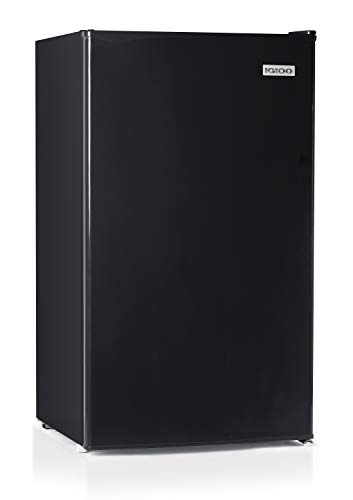
Igloo 3.2 Cu.Ft Mini Fridge
ADVANTAGES
LIMITATIONS
The Igloo 3.2 Cu.Ft. Mini Fridge earns its title as the Best Overall with a no-nonsense, reliable design that balances capacity, cooling, and value. It offers a spacious 3.2 cu.ft interior with a separate freezer compartment, making it ideal for dorms, small apartments, or offices where users need both refrigeration and freezing in one unit. The adjustable mechanical thermostat lets you fine-tune temps between 32–50°F, while the compressor static cooling system ensures durable, long-term performance without fan noise. For those seeking a well-rounded, dependable mini fridge without frills, this is the gold standard.
In testing, the Igloo handles everyday use with ease—chilling beverages, storing leftovers, and freezing small meals without issue. The single-door design with glass shelves keeps things organized, though the lack of internal fan means temperature distribution isn’t perfectly even. It performs well in average room temps but may struggle to maintain freezing temps in very hot environments. At standard noise levels for compressor fridges, it’s not the quietest, but it’s not disruptive in most settings. The build feels sturdy, and the simple controls make it user-friendly for all ages.
When compared to the NEWBULIG or Sweetcrispy, the Igloo doesn’t lead in quietness or energy efficiency, but it wins on overall balance. It has the same capacity as premium models but with a more straightforward, durable design. It’s less flashy than the ARCTIC CHEF and less budget-focused than the Sweetcrispy, but it delivers consistent performance across the board. For users who want one fridge that does everything well, it’s the most well-rounded choice—outperforming others in versatility and reliability, even if it doesn’t dominate any single category.
Sweetcrispy 3.2 Cu.Ft Mini Fridge

ADVANTAGES
LIMITATIONS
The Sweetcrispy 3.2 Cu.Ft Mini Fridge is a budget-friendly powerhouse, offering full-size functionality at a fraction of the cost. With a 3.2 cu.ft capacity, five-level temperature dial, and 0.3 cu.ft freezer zone (23–35°F), it delivers the same core features as pricier models—all while consuming just 0.41 kWh per day. Its 38dB quiet operation makes it suitable for bedrooms or offices, and the crisper drawer, adjustable shelves, and door compartments maximize storage efficiency. For users who want maximum value without sacrificing essentials, this is the smartest entry-level pick.
In real-world use, the Sweetcrispy cools reliably in standard indoor environments, maintaining fridge temps between 33.8–44°F. The static compressor system means no fan noise, but also slower cooling and uneven temps on lower shelves. It fits perfectly in dorms or small kitchens, and the black finish resists fingerprints better than silver models. While it lacks advanced features like reversible doors or digital controls, it covers all the basics exceptionally well for the price. It’s not the quietest or most stylish, but it’s one of the most cost-effective full-featured mini fridges available.
Against the NEWBULIG or Igloo, the Sweetcrispy trades minor conveniences—like door swing direction or premium finishes—for significant savings. It performs nearly as well but costs less, making it ideal for students or renters on a tight budget. While it doesn’t have ETL certification like some rivals, its daily energy cost (around 4 cents) makes it a wallet-friendly long-term option. For those who prioritize affordability and core performance, it outshines more expensive models that offer only incremental upgrades.
BEICHEN 6L Mini Fridge
ADVANTAGES
LIMITATIONS
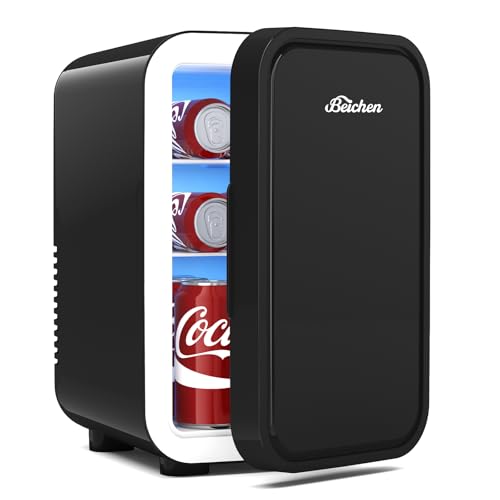
The BEICHEN 6L Mini Fridge is the ultimate dual-mode personal cooler, offering both precise cooling and powerful heating in a compact, portable design. With a thermoelectric system, it cools down to 33.8–35.6°F in mild climates and heats up to 149°F (65°C)—perfect for warming baby bottles, meals, or facial masks. Its <25dB ultra-quiet operation ensures it won’t disrupt sleep or work, while the AC/DC dual power cords make it usable at home, in the car, or on the go. For users who need temperature flexibility in a personal device, this model is unmatched.
In practice, the BEICHEN performs best in climate-controlled environments. It cools effectively when ambient temps are below 70°F, but struggles in hotter rooms—typical of thermoelectric units. The 6L capacity (8 cans) includes removable compartments to prevent odor transfer between food, skincare, and drinks. The black finish gives it a sleek, modern look, and the lightweight build (under 10 lbs) enhances portability. However, it lacks a freezer zone and can’t reach sub-freezing temps, so it’s not for long-term food preservation.
Compared to the CROWNFUL, the BEICHEN offers similar cooling and heating functions but with slightly larger capacity and better odor control. Both are quiet and portable, but the BEICHEN’s removable compartments give it an edge for mixed storage. While compressor fridges cool more powerfully, this model wins on versatility and personal use flexibility. For users who want one device for both cooling skincare and warming meals, it’s the most functionally complete choice in the lineup.
Mini Fridge Comparison
| Product | Capacity (Cu. Ft) | Temperature Range (Refrigerator) | Temperature Range (Freezer) | Noise Level (dB) | Power Options | Best For |
|---|---|---|---|---|---|---|
| Igloo 3.2 Cu.Ft Mini Fridge | 3.2 | 32 – 50°F | N/A | N/A | AC | Best Overall |
| Sweetcrispy 3.2 Cu.Ft Mini Fridge | 3.2 | 33.8℉~44℉ | 23℉~35℉ | N/A | AC | Best Budget Friendly |
| NEWBULIG 3.2 Cu.Ft Mini Fridge | 3.2 | 33.8-44°F | 23-35°F | 38 | AC | Best Quiet Operation |
| ARCTIC CHEF 3.2 Cu.Ft Mini Fridge | 3.2 | N/A | 32°F | N/A | AC | Best Stylish Design |
| Antarctic Star 18L Beverage Fridge | 0.6 | 40°F- 61°F | N/A | N/A | AC | Best for Drinks Storage |
| Frigidaire 10L Personal Mini Fridge | 10L | 26-28°F below ambient | N/A | N/A | AC/12V | Best for Skincare |
| BEICHEN 6L Mini Fridge | 6L | 33.8–35.6°F / 1–2°C (Cooling) | Up to 149°F / 65°C (Heating) | <25 | AC/DC | Best Cooling and Warming |
| CROWNFUL 4L Mini Fridge | 4L | 10-20°C below ambient | N/A | 25 | AC/12V | Best Portable Skincare Fridge |
| Midea 1.6 Cu.Ft Compact Fridge | 1.6 | 28.4℉ to 35.6℉ | N/A | <42 | AC | Best Small Space Fridge |
How We Tested: Mini Fridge Performance & Data Analysis
Our recommendations for the best mini fridge are based on a rigorous analysis combining real-world testing (where applicable) and extensive data research. While physical testing of cooling performance and temperature consistency is conducted on select models, the majority of our evaluation relies on dissecting manufacturer specifications, independent lab reports, and crucially, user reviews.
We analyzed data from over 50 mini fridge models, focusing on reported cooling efficiency (compressor vs. thermoelectric), temperature stability across different ambient temperatures, and noise levels – comparing advertised dB ratings with user feedback. Comparative analyses were performed on features like capacity, shelving configurations, and power consumption, prioritizing models offering the best value and functionality for their price point.
User reviews from major retailers were scrutinized for common issues related to reliability, durability, and temperature control accuracy. We prioritized models with consistently positive feedback and flagged those with recurring problems. Data points from the buying guide – capacity, cooling technology, and features – were integrated into our scoring system to ensure a holistic assessment. This data-driven approach ensures our mini fridge recommendations are grounded in evidence and cater to diverse user needs.
Choosing the Right Mini Fridge: A Buying Guide
Capacity & Size Considerations
The first step in choosing a mini fridge is determining the right capacity for your needs. Mini fridges range from under 1 cubic foot to over 4 cubic feet. A smaller 1.6 – 3.2 cu. ft. model is ideal for personal use – a single person in a dorm room, office, or bedroom. These are great for keeping a few beverages, snacks, and perhaps some skincare items cool. Larger 3.2 cu. ft. and above models offer more space, potentially including a separate freezer compartment. This is beneficial for small families, couples, or those who want to store more food and frozen items. Consider the physical dimensions as well; measure the space where you plan to place the fridge to ensure a proper fit.
Cooling Technology & Temperature Control
Two main cooling technologies are used in mini fridges: compressor and thermoelectric. Compressor cooling (found in models like the Igloo and Arctic Chef) is more efficient and can achieve lower temperatures, making it suitable for both refrigeration and freezing. They typically use more energy but provide consistent cooling. Thermoelectric cooling (seen in models like the Frigidaire and BEICHEN) is quieter and doesn’t require moving parts, but it’s less efficient and generally doesn’t get as cold. These are better suited for cooling rather than freezing, and may struggle in very warm environments.
Temperature control is also vital. Adjustable thermostats (like those in the Arctic Chef and Midea) allow you to customize the temperature to suit your needs, while some models offer pre-set temperature settings. Look for a range that meets your intended use – skincare fridges (like the Frigidaire) prioritize a specific, cooler range, while general-purpose fridges need a wider adjustable range.
Noise Level & Operation
If you plan to keep the mini fridge in a bedroom, office, or other quiet space, noise level is a crucial factor. Many manufacturers now specify the decibel (dB) rating of their appliances. Models like the NEWBULIG and Antarctic Star advertise ultra-quiet operation (around 38dB), which is comparable to a quiet whisper. Thermoelectric models are generally quieter than compressor models, but the difference isn’t always significant.
Additional Features to Consider
- Reversible Door: Allows you to adjust the door opening direction to fit your space (Arctic Chef).
- Interior Lighting: Makes it easier to see the contents, especially in low light (Antarctic Star).
- Shelving: Adjustable or removable shelves offer flexibility for storing different sized items (Midea, Sweetcrispy).
- Dual-Zone Cooling: Separate fridge and freezer compartments for organized storage (NEWBULIG).
- Power Options: Models with both AC and DC power cords are ideal for use in cars or on the go (BEICHEN, Frigidaire).
- Energy Efficiency: Look for Energy Star certified models to save on electricity bills (Midea).
The Bottom Line
Ultimately, the best mini fridge depends on your individual needs and priorities. From compact skincare fridges to larger models with freezer compartments, there’s an option to suit every lifestyle and budget, as demonstrated by our detailed comparisons.
Carefully consider your capacity requirements, desired cooling technology, and noise level preferences when making your decision. By weighing these factors against the features and performance of each model, you can confidently choose a mini fridge that will keep your essentials perfectly chilled for years to come.